
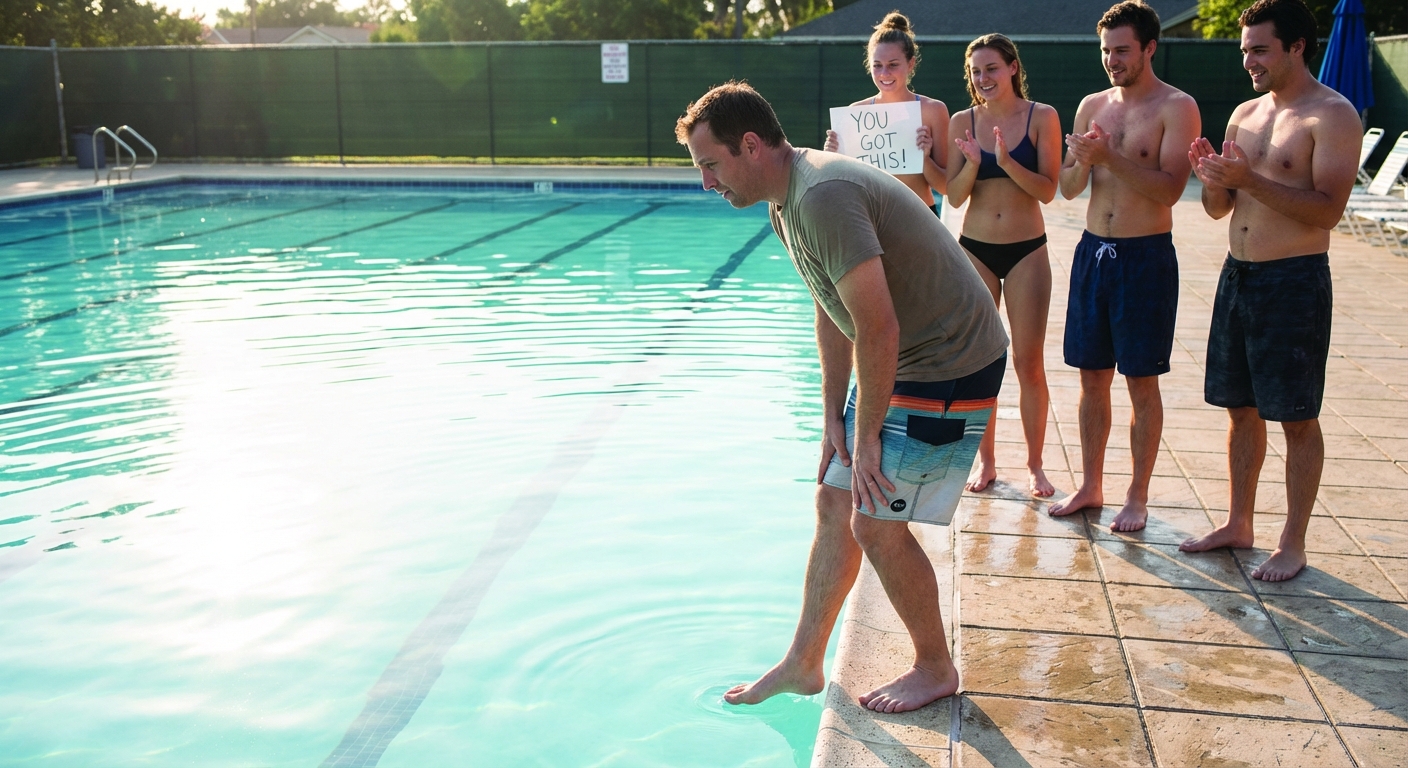
Fear isn’t the enemy. Staying exactly the same for years because of it is.
You Don’t Need to Be Fearless. You Need to Be 10 Seconds Braver.
The world quietly rewards people who can do one thing: take slightly scary actions slightly more often than everyone else.
Not reckless. Not fearless.
Just micro‑brave.
Psychologist Dr. Susan Jeffers, author of Feel the Fear and Do It Anyway, nailed it:
“The fear will never go away as long as you continue to grow.”
So instead of trying to delete fear, learn to work with it in tiny, daily doses.
What Is Micro‑Bravery?
Micro‑bravery is the practice of taking small, controlled, slightly uncomfortable actions on purpose, every day.
- Speaking up once in a meeting
- Asking one question you’re afraid sounds “dumb”
- Sending one bold email
- Saying “no” when you’d normally say “yes” to avoid conflict
Think of it as emotional strength training.
Just like muscles grow by lifting slightly heavier weights, your courage grows by facing slightly heavier discomfort.
Neuroscientist Dr. Andrew Huberman explains that when we face fear and don’t run, our brain rewires, and what scared us starts to register as manageable instead of threatening.
The Comfort Zone Myth (and What Actually Happens)
People say, “Get out of your comfort zone.” Sounds heroic. Also, vague.
Here’s the real model:
Comfort Zone – things that feel easy
Stretch Zone – things that feel uncomfortable but doable
Panic Zone – things that shut you down
Micro‑bravery lives in the Stretch Zone, not panic.
Rule: If a step makes you want to curl into a ball, it’s not brave — it’s too big.
Your goal isn’t to leap. It’s to inch.
Step 1: Map Your Fear Hotspots
Everyone has a few areas where fear speaks the loudest:
- Social (networking, dating, public speaking)
- Professional (asking for a raise, pitching ideas, negotiating)
- Personal (setting boundaries, having hard conversations)
Action move (5 minutes):
Answer these questions quickly:
- “If I were 20% braver, what would I do this month?” (Write 3–5 answers.)
- Circle the one that makes your stomach flip — in a good way.
That’s your Fear Project for the next 30 days.
Step 2: Break It into Micro‑Moves
Let’s say your Fear Project is: “Speak confidently in meetings.”
Jumping straight to “give a TED‑style presentation” is panic‑zone stuff.
Micro‑moves instead:
- Week 1: Ask one question per meeting.
- Week 2: Make one short comment on something you agree with.
- Week 3: Share one idea you prepared in advance.
- Week 4: Volunteer to give a 2‑minute update.
Same goal. Completely different emotional load.
Action move (10 minutes):
- Take your Fear Project.
- Break it into at least 4 tiny steps over 4 weeks.
- Each step should feel like: “Scary, but I can probably handle it.”
The 10‑Second Rule That Changes Everything
Courage has a short window. If you wait too long, your brain talks you out of it.
Use the 10‑Second Rule:
When you feel the urge to do something brave, you have 10 seconds to start.
Not to finish it. Just to start.
Examples:
- Hit “send” on the email draft.
- Raise your hand.
- Dial the number.
- Walk over and say “hey.”
Author Mel Robbins calls a similar tool the 5‑Second Rule, and it’s helped millions of people take action before anxiety hijacks the wheel.
Action move (today):
Catch one moment where you think, “I should…” and then:
- Count down from 5.
- Move your body toward the action.
Don’t let your brain build a case against it.
The Science: Why Micro‑Bravery Works
Three reasons this approach is sneakily powerful:
- Desensitization – Repeated, safe exposure to a fear reduces its intensity. Therapists use this every day to treat phobias.
- Evidence stacking – Each small win becomes proof: “I can handle this.” That evidence rewires your self‑image.
- Reward hijack – Each micro‑brave action releases a tiny hit of dopamine (the brain’s reward chemical), teaching your brain: “Bravery = good.”
Over time, fear stops being a stop sign and becomes more like a yellow light: “Pay attention, but proceed.”
Build a Micro‑Bravery Log (Takes 60 Seconds a Day)
To make this stick, you need to see your courage accumulating.
Each evening, jot down answers to two questions:
“What micro‑brave thing did I do today?”
“What happened (or didn’t happen) because of it?”
Example log entry:
- “Sent a follow‑up email to a client I was nervous to message. Result: They appreciated the reminder, no drama.”
This does two things:
- Highlights reality: your worst‑case scenarios rarely happen.
- Normalizes bravery as part of your identity.
Identity follows evidence. Collect evidence that you’re the kind of person who does hard things.
Real‑World Micro‑Bravery Ideas You Can Try This Week
Pick one from each category and schedule it.
Social:
- Give a genuine compliment to a stranger.
- Ask a coworker a non‑work question.
- Join a group or class where you don’t know anyone.
Professional:
- Ask your manager, “What’s one thing I could do better?”
- Share one idea on a project instead of staying quiet.
- Update your resume or LinkedIn and send it to one person for feedback.
Personal:
- Say “no” to one invitation you don’t actually want.
- Share how you really feel in a low‑stakes situation.
- Go to a movie, café, or event alone.
None of these will break you. All of them will quietly stretch you.
Shareable Insight: Courage Is a Skill, Not a Personality Type
You’re not “just a shy person.” You’re a person with a certain courage skill level — and skills can be trained.
To recap your micro‑bravery plan:
- Pick ONE Fear Project for 30 days.
- Break it into micro‑moves.
- Use the 10‑Second Rule to start before overthinking.
- Log one act of courage daily.
You don’t need a new personality.
You just need to be 10 seconds braver, once a day.
Let the person you want to be borrow your body for those 10 seconds. The rest will take care of itself.