
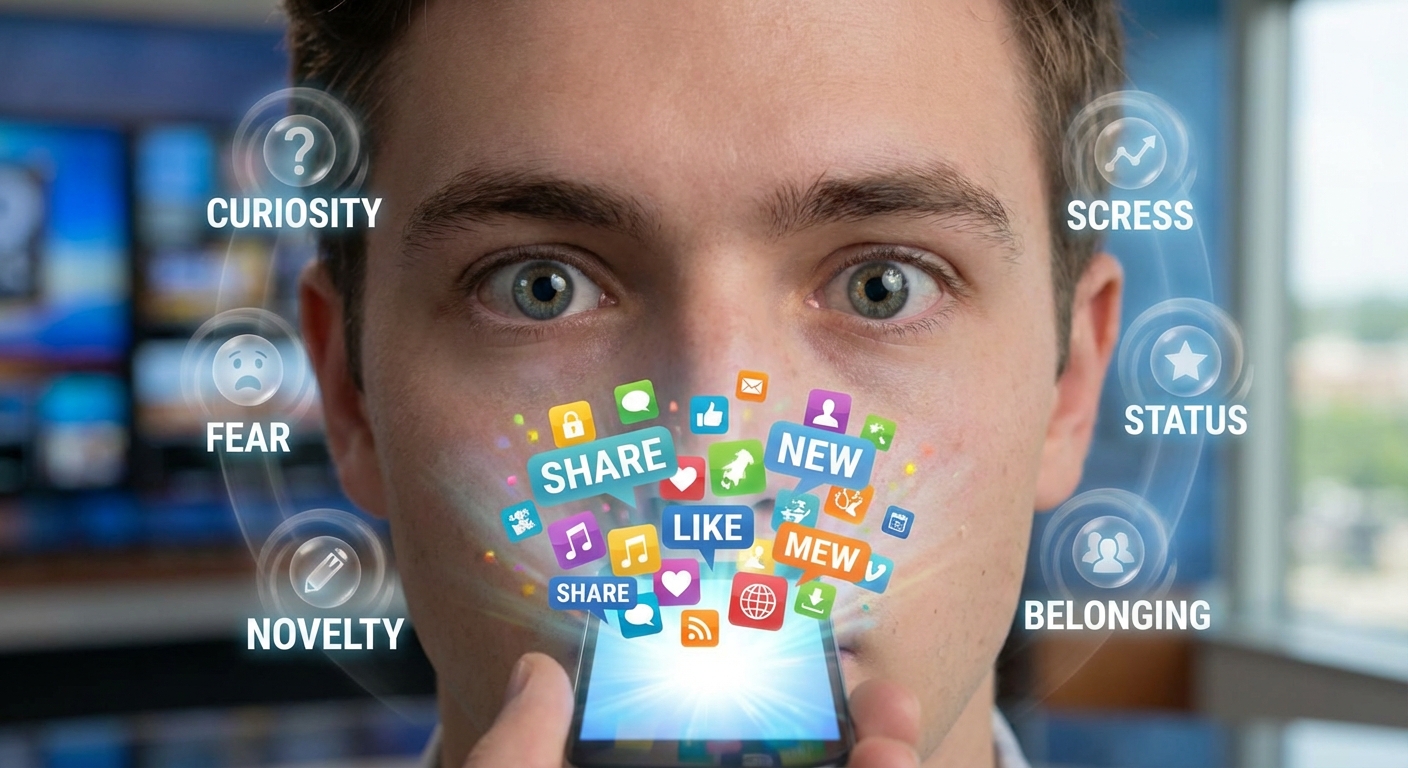
Look at anything blowing up right now—AI chatbots, sleep tourism, rage-cleaning videos, 10-second recipes—and you’ll find the same hidden wiring: psychology.
The Secret Psychology Hiding Inside Every Trend
Dr. Maya Khatri, a behavioral scientist, says:
“Trends aren’t random. They’re mass experiments in what human brains can’t resist clicking.”
Once you understand the triggers behind what’s Trending Now, you can:
- Create more clickable content
- Make better products and offers
- Protect yourself from mindless scrolling
Here are 7 psychological triggers that quietly power almost every trend—and how to use them ethically.
1. The Curiosity Gap: “Wait, What?”
Curiosity is gasoline on the trend fire.
Trending content constantly teases: “There’s something you don’t know yet… but you could.”
Examples:
- “I tried waking up at 4:30 a.m. for 30 days. Here’s what happened.”
- “No one is talking about this hidden fee that’s quietly draining your bank account.”
How to use it:
- Turn your tip, story, or product into a before/after curiosity gap.
- Example: Instead of “How to Save Money”, try:
- “The 5-minute habit saving me $300 a month (without budgeting apps).”
Action step: Rewrite your next social post or email subject with a question or a contrast: “Most people do X, but the people winning are doing Y.”
2. Social Proof: “Everyone’s Here, You Should Be Too”
We are pack animals with Wi-Fi.
When something’s trending, your brain whispers: “If this many people care, maybe I should too.”
Stats back this up: A BrightLocal report found 87% of people trust online reviews as much as personal recommendations. Scale that up to views, likes, and shares—and you get the engine of virality.
Where you see it:
- “1.2M views in 24 hours”
- “Over 50,000 people downloaded this checklist”
- Comment sections that look like group chats
How to use it:
- Add numbers: users, results, countries, time saved.
- Show real people using your ideas, not polished testimonials.
Ethical tip: Never fake numbers. It works short term and destroys trust long term.
3. Identity Signaling: “People Like Me Do Things Like This”
Trends give people a simple way to say: “This is who I am (or who I want to be).”
Think:
- “Hot girl walks” – Not just walking. It’s a vibe, a mood, a self-story.
- “Quiet luxury” – Not just clothes. It’s wealth, restraint, insider status.
- “No-spend challenge” – Not just budgeting. It’s self-control and minimalism.
Brand psychologist Jonah Lear notes:
“People don’t chase trends. They chase the version of themselves a trend promises.”
How to use it:
Finish this sentence for your idea, product, or content:
“People who ___ are the kind of people who use/follow/try this.”
Example:
- “People who take their time seriously use calendar blocking.”
- “People who are done feeling behind are learning AI prompts now, not later.”
Use that language directly in your copy.
4. Emotional Extremes: Rage, Awe, or Relief
If it doesn’t make people feel, it doesn’t trend.
Look at your feed:
- Outrage threads
- Heart-melting animal rescues
- “I finally got diagnosed after 10 years” stories
- Deeply satisfying cleaning/organizing clips
Trending content often lives at emotional edges… or gives deep relief from them.
How to use it (without being toxic):
- Tap into frustrations your audience already has.
- Offer relief, clarity, or a small win.
Example:
- Frustration: “I never finish what I start.”
- Relief content: “The 10-minute rule that made me actually stick to habits.”
Aim for empathy + solution, not manufactured drama.
5. Speed & Simplicity: “I Can Do This Now”
Trends that explode usually feel instantly doable:
- 3-ingredient recipes
- 10-minute workouts
- 5-line journal prompts
- 1-sentence email hacks
Cognitive scientist Dr. Elise Park explains:
“When a task feels complex, brains delay. When it feels simple, we experiment.”
How to use it:
Turn your idea into a one-screen solution:
- One checklist
- One 3-step process
- One before/after visual
- One sentence rule
Example:
Instead of “My 29-rule productivity system”, try:
“The 3-tab rule: if I have more than 3 tabs open, I’m not focusing—I’m avoiding.”
6. Novelty With Familiar Roots
The hottest trends usually feel like:
“Oh, that’s new… but also kind of like this thing I already understand.”
Think:
- AI tools = “Google + a smart intern.”
- Notion templates = “Spreadsheets, but prettier.”
- Digital nomadism = “Travel, but with Slack.”
How to use it:
When explaining anything new, use the “It’s like X but for Y” frame.
Examples:
- “This budgeting method is like meal prep, but for your money.”
- “This writing framework is like Lego blocks, but for your ideas.”
You lower the mental barrier, so people actually try it.
7. FOMO vs. JOMO: The Push-Pull Of Modern Trends
Every trend carries two forces:
- FOMO – Fear of missing out
- JOMO – Joy of missing out
Some trends say: “Everyone’s doing this, don’t be last.”
Others say: “Everyone’s exhausted. Opt out with style.”
Minimalism, slow living, digital detox, and low-key lifestyles trend because high-speed everything is exhausting.
How to use it:
Ask: Is my idea/product/content promising more or less?
- More: money, speed, reach, influence, fun.
- Less: stress, clutter, decisions, noise.
Make that promise explicit in your hook.
Turning Psychology Into Action: A Quick Checklist
Next time you see a “Trending Now” topic—or create something you want to trend—run it through this checklist:
Curiosity: Does this create a clear “I need to know the next part” feeling?
Social proof: Am I showing that real people care or benefit?
Identity: Can someone use this to say “this is who I am”?
Emotion: Which emotion does this lean into—and does it offer relief?
Simplicity: Can someone try a version of this in 5–10 minutes?
Familiar novelty: Have I connected this to something people already get?
FOMO/JOMO: Am I promising more of what they want—or less of what they’re sick of?
You don’t need all seven—but if you hit three or more, you’re no longer posting into the void.
You’re designing for human brains.
Shareable Insight
“Things don’t trend because they’re the best. They trend because they’re the easiest for human brains to notice, share, and try.”
Screenshot this, send it to a creator friend, or keep it nearby the next time you wonder:
Why did that blow up—and how do I do it on purpose?