
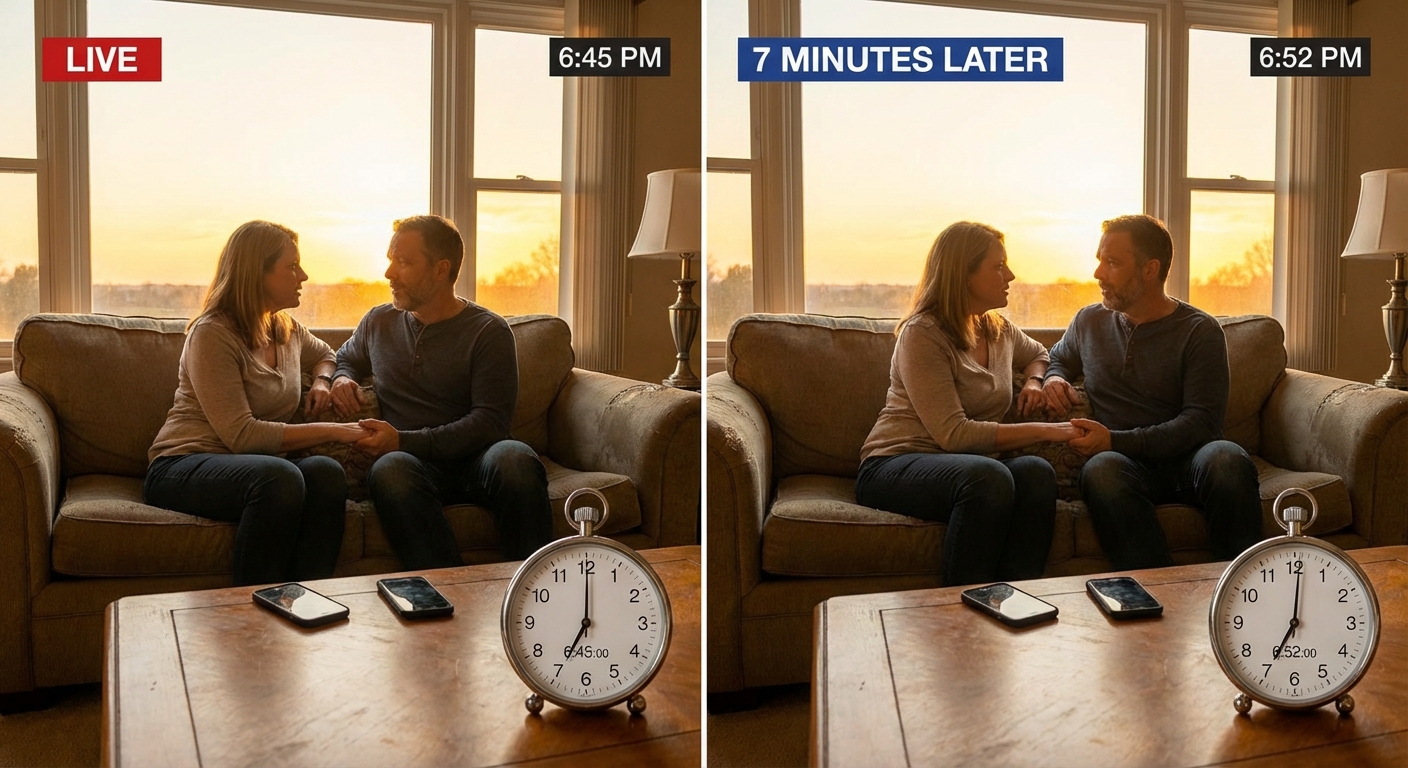
You don’t need a luxury vacation, a couple’s retreat, or a grand romantic gesture to transform your relationship.
The Tiny Time Investment Your Relationship Is Begging For
You need seven minutes.
Not metaphorical minutes. Actual, timer-on-your-phone, seven minutes.
Psychologists call these “micro-moments of connection”—short, intentional bursts of attention that literally change the chemistry of your relationship.
“It’s not the big anniversaries that predict whether a couple will stay together; it’s the small, daily moments of connection.” — Dr. John Gottman, relationship researcher
Let’s break down how seven minutes a day can quietly rebuild trust, attraction, and emotional safety.
The Science: Why Micro-Moments Beat Grand Gestures
Surprising fact: In one long-term study, couples researchers found that happy couples respond to each other’s bids for attention about 86% of the time. Unhappy couples? Only around 33%.
A “bid” is anything from:
- “Look at this meme.”
- “My boss annoyed me today.”
- “Can you help me with this?”
Every response says one of three things:
- Toward: “I’m listening, I care.”
- Away: “I’m distracted, not now.”
- Against: “That’s dumb, why are you telling me this?”
Here’s the sneaky part: You don’t need more time together. You need more quality per minute.
Seven intentional minutes per day creates a compounding effect:
- Reduces stress hormones (cortisol)
- Increases bonding hormone (oxytocin)
- Builds a “buffer” against future conflict
This isn’t romance hype. It’s nervous-system-level reality.
The 7-Minute Habit (Use This Exact Script If You Want)
Try this once a day for two weeks.
Step 1: Agree on a Time (30 seconds)
Decide:
- Morning before phones
- After work
- Before bed
It doesn’t matter when—only that you both know it’s happening.
Ground rule: No phones. No TV. No multitasking.
Step 2: The 3-2-1 Check-In (About 4 Minutes)
Use this simple structure:
You each share:
3 things you appreciated about the other in the last 24 hours
Example: “Thanks for making coffee this morning.”
2 feelings you had today (not just ‘fine’ or ‘tired’)
Example: “I felt anxious before that meeting, and relieved when it ended.”
1 thing you need in the next 24 hours
Example: “I need a quiet evening tonight.”
That’s it. No debate, no fixing, no advice unless asked.
Pro tip: If this feels awkward, good. Awkward usually means you’re doing something new that your relationship needs.
Step 3: 1-Minute Touch or Affection (1 Minute)
Research from Carnegie Mellon University shows 20 seconds of hugging lowers blood pressure and boosts oxytocin.
Choose one:
- 20-second hug
- Holding hands
- Sitting with legs touching
- Forehead touch
Your body will start believing, “This is my safe person.”
Step 4: 2-Minute “Anything But Logistics” Chat (2 Minutes)
No talk about:
- Bills
- Kids’ schedules
- Chores
- Work to-do lists
Instead, ask one question:
- “If money wasn’t an issue, what would you do for a year?”
- “What’s a song that instantly puts you in a good mood?”
- “What did you want to be when you were 10?”
You’re not just partners. You’re people. Stay curious.
What This Habit Quietly Fixes (Without You Having a Big Talk)
1. The Slow-Drip Resentment
Resentment isn’t usually caused by one big betrayal. It’s the daily drip of:
- Feeling ignored
- Feeling unseen
- Feeling like roommates handling logistics
Seven minutes of targeted appreciation starts plugging those leaks.
“Gratitude is like emotional WD-40 for relationships. It unsticks what’s stuck.” — Dr. Amie Gordon, social psychologist
2. The Emotional Distance
A lot of couples say:
“We just grew apart.”
You don’t actually “grow apart.” You stop updating your map of who your partner is becoming.
The 2-minute curiosity chat keeps that map fresh.
3. The Silent Stress
You can’t support what you don’t see.
When you share two actual feelings, your partner gets real data to respond to:
- “You’re anxious. Want me to handle dinner?”
- “You’re overwhelmed. Want to cancel this weekend thing?”
Now you’re a team again—not two solo players co-living.
If Your Partner Is Skeptical, Say This
Don’t call it a “relationship exercise.” Call it:
- “Our 7-minute daily debrief”
- “Mini check-in so we don’t turn into roommates”
You can also try:
“Can we try this for 7 days, just as an experiment? If it feels useless, we’ll drop it.”
People resist forever. They tolerate experiments.
Common Mistakes (Don’t Sabotage Your 7 Minutes)
Turning it into a complaint session
This is not the time for: “I wish you’d finally…” or “You never…” Save heavy conversations for a separate, agreed-on time.
Problem-solving too quickly
Your job is to listen, not fix.
Keeping score
Don’t weaponize what was shared later: “Well, you said you were stressed, so…”
Doing it only when things feel bad
It works best as a daily maintenance habit, not emergency repair.
Fast, Actionable Takeaways
- Set a recurring 7-minute timer labeled: “Us > Everything Else”
- Use the 3-2-1 script for instant structure
- Add 20 seconds of touch to calm your nervous systems
- Ask one fun, non-logistical question daily
Do this for 14 days. Then ask each other:
- “Do we feel closer?”
- “Do we fight differently?”
- “Do I feel more ‘got’ by you?”
If the answer is even a mild yes, remember:
You didn’t change your relationship with a grand gesture.
You did it in seven minutes.
Every. Single. Day.
Your relationship doesn’t need more drama. It needs more deliberate minutes.
Set the timer.